Arkansas has officially launched Rapid DNA technology at participating booking stations, becoming the 3rd state in the nation to deploy the technology, according to the Arkansas State Crime Laboratory.
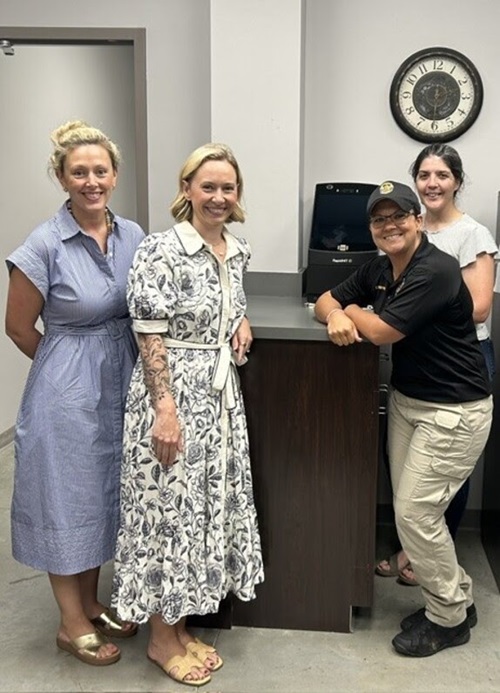
Rapid DNA is a fully automated process capable of developing a DNA profile from a qualifying arrestee sample in approximately 90 minutes.
Under the initial Arkansas rollout, resulting DNA profiles are uploaded to the Combined DNA Index System, commonly known as CODIS, where they are first searched against crime-scene DNA profiles connected to public-safety cases.
A secondary search against all eligible crime-scene profiles occurs within 24 hours.
If the DNA profile from an arrestee matches evidence from a crime scene, the booking agency and investigating agency are notified.
The FBI describes Rapid DNA as an automated process that can develop a DNA profile from a mouth swab in approximately 1 to 2 hours without the need for a traditional DNA laboratory or human interpretation. The FBI’s Rapid DNA booking-station program allows qualifying arrestee profiles to be entered into CODIS and compared with unsolved crime-scene evidence.
Arkansas officials said the Saline County Detention Center in Benton began processing qualifying arrestee DNA samples on September 23, 2026.
The Faulkner County Detention Center in Conway is preparing to participate and is expected to begin processing qualifying samples in the near future.
Governor Sarah Huckabee Sanders called the launch an important public-safety advancement and credited federal, state and local partners involved in bringing the program to Arkansas.
Arkansas Public Safety Secretary Col. Mike Hagar said Rapid DNA gives law enforcement another investigative tool while requiring strict standards involving accuracy, privacy, training and oversight.
Arkansas received FBI authorization to operate the program during the summer of 2026 following training and testing conducted by Arkansas State Crime Laboratory and Saline County Sheriff’s Office personnel.
Arkansas State Crime Laboratory Director Dr. Theodore Brown said the technology could provide investigators with actionable information in hours instead of the weeks or months sometimes associated with traditional DNA processing.
Brown said the faster turnaround can be particularly important while a suspect remains in custody and investigators are attempting to determine whether that person may be connected to unsolved crimes.
Brown credited forensic scientists Miranda Crawford and Emma Knight with helping make the program operational and said Jennifer Beaty-West, Deputy Director of Scientific Operations, provided leadership and coordination during implementation.
Funding for the initiative included federal support along with assistance from the Arkansas Attorney General’s Office.
U.S. Senator John Boozman said funding secured for Saline and Faulkner counties will allow investigators to more quickly compare qualifying suspects with DNA evidence.
Attorney General Tim Griffin said the technology will expand the state’s ability to investigate crimes and assist in bringing cases to resolution.
Arkansas law has previously provided funding for Rapid DNA technology. State budget documents describe Rapid DNA as a process designed to quickly develop DNA profiles from qualifying samples and compare them with state and national databases.
The FBI says Rapid DNA booking-station profiles can also be searched against its DNA Index of Special Concern, which contains qualifying crime-scene DNA profiles associated with cases including unsolved homicides, sexual assaults, kidnappings, terrorism investigations and other cases involving potential public-safety risks.
Arkansas officials say all personnel operating Rapid DNA systems at participating detention centers must receive required training and certification.
Participating sites are also required to comply with Arkansas State Crime Laboratory and FBI policies.
Officials said DNA samples, resulting profiles and related information remain subject to state and federal confidentiality and privacy requirements.