Arkansas agriculture officials are taking proactive steps to keep the deadly New World Screwworm parasite from spreading into the Natural State as new cases continue to be reported in Texas and New Mexico.
The Arkansas Department of Agriculture announced new animal entry requirements this week aimed at preventing the flesh-eating parasite from reaching Arkansas livestock, pets, and other warm-blooded animals.
According to federal officials, there are currently 12 confirmed New World Screwworm cases in the United States, including 11 cases in Texas and 1 case in New Mexico. The most recent case was reported Friday in Sutton County, Texas.
While no cases have been detected in Arkansas, state officials say prevention efforts are critical because of the potentially devastating impact the parasite could have on the state’s agricultural economy.
“It can be very devastating to the agricultural economy of the state of Arkansas, and when you pile that on along with our cattle numbers being at an all-time low, it can be a devastating deal,” said Arkansas Farmers Union President Eddie Todd.
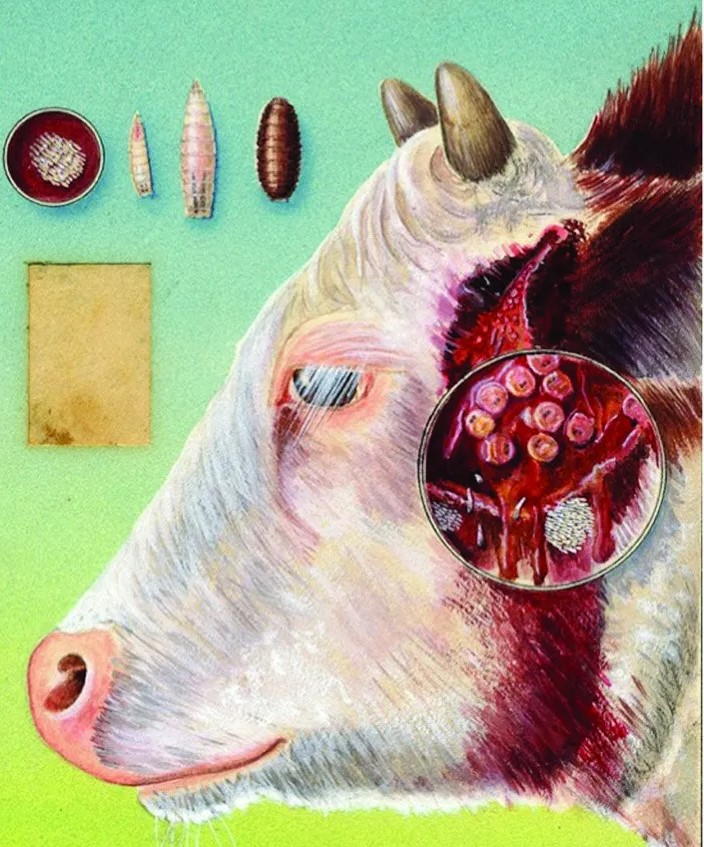
The New World Screwworm is a parasitic fly whose larvae feed on living tissue. Unlike common flies that feed on dead tissue, screwworm larvae infest open wounds and can cause severe injury or death to livestock and other warm-blooded animals.
“The screwworm is a parasite, it’s a flesh-eating parasite,” Todd said. “When you see an open wound, that could very well be the screwworm, and what it’s going to do, it’s actually going to eat that animal until it kills that animal.”
State Veterinarian Dr. Andrew Fidler said Arkansas is implementing stricter entry requirements for animals arriving from states with active screwworm cases.
Under the new regulations, all warm-blooded animals entering Arkansas from an affected state must be accompanied by an Interstate Certificate of Veterinary Inspection, known as an iCVI, dated within 7 days of entry. The certificate must verify that the animals were inspected and found free of evidence of New World Screwworm infestation.
Animals entering Arkansas from designated infested zones, defined as areas within a 12.4-mile radius of a confirmed case, will face additional restrictions and require a state entry permit before crossing into Arkansas.
“They have a veterinarian inspection within a week prior to their movement to ensure they are free from the pests,” Fidler explained. “We’re just asking for a shortened window during which time they have veterinarian inspection before they cross state lines.”
The U.S. Department of Agriculture reports nearly 29,000 screwworm cases have been documented in Mexico, where the pest continues to spread northward. The parasite was eradicated from the United States more than 60 years ago but re-emerged in North America after migrating north from South America in recent years.
Although livestock remain the primary concern, the parasite can also infest dogs, cats, wildlife, and even humans in rare cases.
Officials urge animal owners to watch for wounds that fail to heal, foul-smelling discharge, tissue damage, or visible maggots around an injury and to report suspected cases immediately.
To assist producers, the Arkansas Department of Agriculture is launching an online reporting system that will allow farmers and ranchers to submit photographs of suspected infestations and receive guidance on next steps.
Todd said Arkansas farmers are already facing significant challenges and that preventing the spread of screwworm is essential to protecting the state’s livestock industry.
“You lose an animal, that’s an animal that there’s not going to be any money coming from, there’s not going to be anything to sell, not going to be anything to eat,” Todd said. “It’s just another piece in a long line of problems that the farmers have.”
Officials emphasized there is no risk of contracting New World Screwworm from consuming meat products.