Dr. Jason Kennedy, assistant professor of anthropology at Lyon College and co-director of the Archaeological Field School, teaches Zoe Anderson, left, and Morrigan Crist how to draw unit profiles documenting stratigraphy at the 3IN1 archaeological site.
Lyon College students uncovered evidence of life in the White River Valley nearly 500 years ago while gaining practical experience for careers in archaeology.
Students participating in the 2025 Lyon College Archaeological Field School discovered pottery fragments, stone tools, animal bones, ancient structural features and the remains of a burned Native American house.
Some workdays began at 5 a.m. as students attempted to complete their excavation duties before the worst of the summer heat arrived.
“The Lyon College Archaeological Field School was created to provide students with the hands-on experience required for professional archaeology,” said Dr. Jason Kennedy, assistant professor of anthropology and co-director of the field school.
Kennedy said the curriculum introduces students to all 3 phases of cultural resources management and prepares them for private-sector archaeology careers.
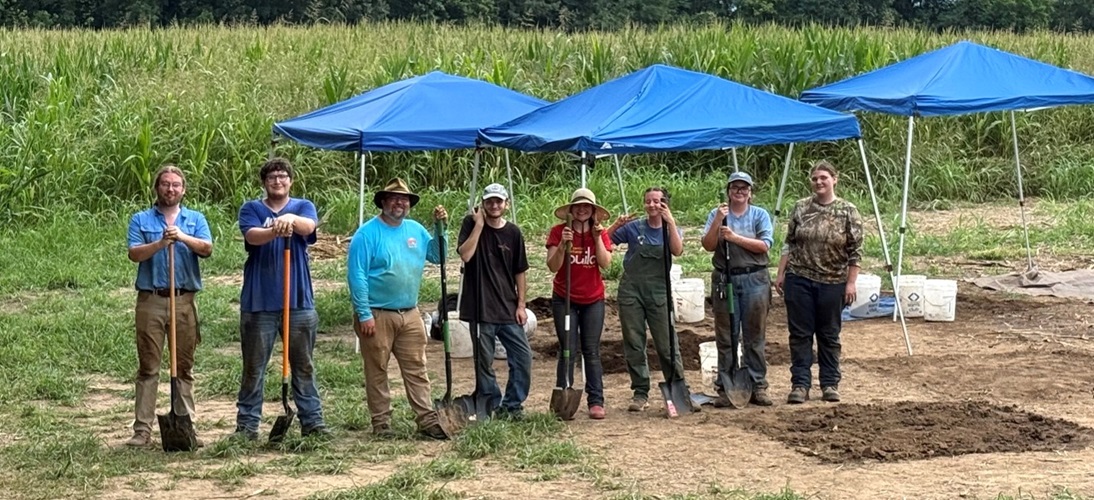
Participants in the 2025 Lyon College Archaeological Field School pose after backfilling excavation units at the 3IN1 site. Pictured from left are Owen Phillips, John-Keith Walling, Dr. Jason Kennedy, Cade Cartwright, Zoe Anderson, Ava “Kat” Briscoe, David Hefner and Sadie “Spot” Martin.
The monthlong field school operated from June 2 through July 2, 2025. Students divided their time between archaeological surveys on the Lyon College campus and excavations at a protected site identified as 3IN1.
The numerical designation is used to protect the archaeological site’s exact location.
Students learned to survey land, excavate by hand, document discoveries, map sites using GPS technology and drones, and analyze artifacts in a laboratory.
They worked alongside Kennedy, Dr. Juliet Morrow of the Arkansas Archaeological Survey and archaeological assistant Sarah Stuckey.
Kennedy said he limited his direct involvement when possible, allowing students to take ownership of the excavation and gain meaningful professional experience.
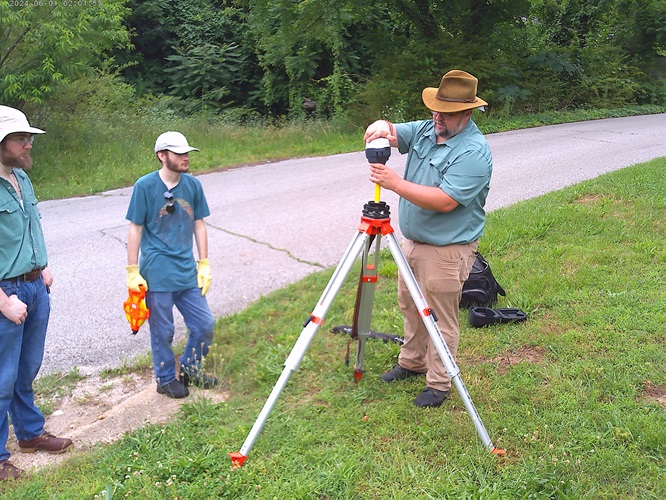
Dr. Jason Kennedy, right, demonstrates the setup of a Global Navigation Satellite System base station to Cade Cartwright, center, and Owen Phillips.
The excavation focused on a 30-acre site preserving evidence of at least 8,000 years of human occupation.
Archaeologists believe the site contained more than 120 rectangular houses surrounding a central plaza during the mid-1500s. The community may have also been enclosed by a wooden palisade.
The settlement existed during the same period that Spanish explorer Hernando de Soto traveled through the Mississippi and Arkansas river valleys. That connection makes the location particularly important to researchers studying Native communities during the period of early European contact.
Earlier geophysical surveys detected underground signatures that researchers believed could be buried structures. Excavation by the Lyon College students confirmed that some of the signatures were houses.
Students uncovered the remains of a burned wattle-and-daub structure constructed with wooden framing covered in clay. Fire hardened portions of the clay walls, helping preserve the building’s remains for centuries.
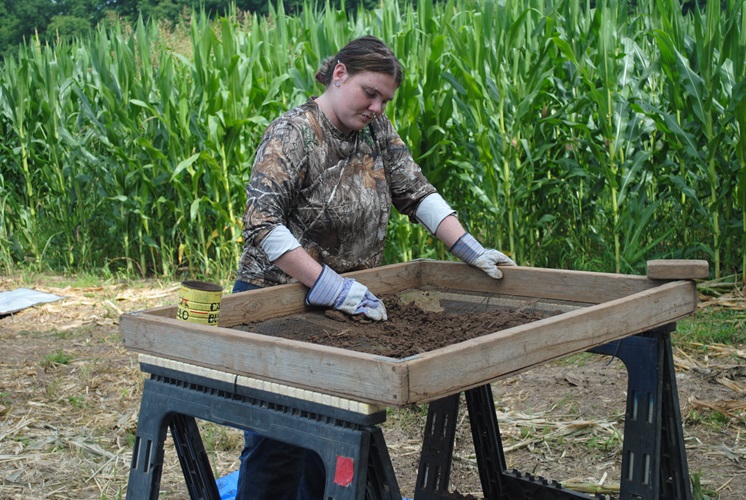
Sadie “Spot” Martin screens excavated soil for artifacts at the 3IN1 archaeological site during the Lyon College Archaeological Field School.
Inside and around the structure, students recovered pottery fragments once used for cooking and storage, chipped stone tools, ground stone tools used to process food and animal bones that offered additional evidence about daily life at the settlement.
One of the excavation’s most memorable discoveries was a piece of specular ochre, a naturally occurring iron-oxide pigment with a purple appearance.
Student Cade H. Cartwright of Locust Grove said Zoe Anderson discovered the pigment while the pair worked in Unit 3.
“We had found some red ochre previously, but this specular ochre had a nice purple color and looked similar to modern makeup,” Cartwright said.
Cartwright said the excitement surrounding the unusual discovery made it an unforgettable part of the field school.
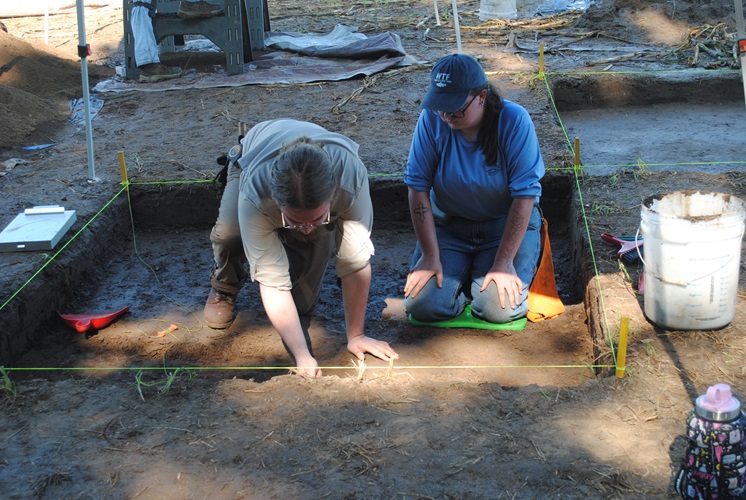
Owen Phillips, left, and David Hefner excavate Unit 1 at the 3IN1 archaeological site during the Lyon College Archaeological Field School.
During the final days of excavation, Ava “Kat” Briscoe and John-Keith Walling uncovered a complete ground stone anvil. Researchers believe the household tool may have been used with a larger stone to process corn or nuts.
Briscoe said finding proof of everyday household life was one of the excavation’s highlights.
Students also identified post molds outlining portions of the ancient structure.
Artifacts recovered at the site indicate residents hunted deer and other animals, caught fish, processed agricultural crops and used pottery to prepare and store food.
Kennedy said the findings suggest 3IN1 may have been among the largest and most influential Native communities in the Middle White River Basin.
“More work is needed to confirm this, but it looks like 3IN1 was a large community and possibly the primary site of a regional network of communities,” Kennedy said.
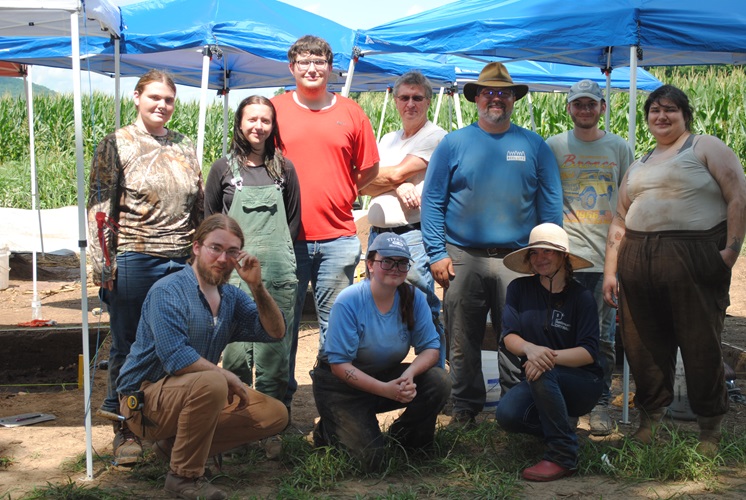
Participants in the 2025 Lyon College Archaeological Field School gather for a group photo. Front row, from left, are Owen Phillips, David Hefner and Zoe Anderson. Back row, from left, are Sadie “Spot” Martin, Ava “Kat” Briscoe, John-Keith Walling, Paul “Doug” Brown, Dr. Jason Kennedy, Cade Cartwright and Morrigan Crist.
The field school also helped students better understand the responsibilities and career opportunities associated with professional archaeology.
Cartwright said the experience reinforced his goal of becoming a maritime archaeologist.
Briscoe said the field school helped define her interest in forensic anthropology. She later completed a senior internship as a deputy coroner in Independence County and hopes to pursue a master’s degree in forensic anthropology.
Anderson said teamwork was among the experience’s most memorable elements. Students divided responsibilities such as paperwork, screening soil and digging based on their individual strengths.
The field school also welcomed Quapaw Elder Bill Griffin and members of his family to the excavation.
Kennedy said the visit demonstrated the importance of consulting and collaborating with descendant communities while preserving their history.

John-Keith Walling removes a flotation sample from Unit 2 at the 3IN1 archaeological site during the Lyon College Archaeological Field School.
The archaeological work continued after the excavation ended. Students enrolled in Archaeological Artifact Analysis during the fall semester to wash, catalog and study the recovered materials.
Participants in the field school included Zoe Anderson, Ava “Kat” Briscoe, Paul “Doug” Brown, Cade H. Cartwright, Morrigan Crist, David Hefner, Sadie “Spot” Martin, Owen Phillips and John-Keith Walling.
Researchers have since expanded geophysical surveys at the site and started looking for possible evidence connected to the Hernando de Soto expedition.
The Arkansas Archaeological Society plans to hold its annual training program at the site in 2027. Lyon College hopes to conduct another archaeological field school in 2028.
Kennedy said the students demonstrated remarkable enthusiasm and resilience, including asking to begin work at 5 a.m. to avoid the extreme heat.
The artifacts are helping researchers better understand Arkansas history while providing students with practical skills and professional experience that cannot be duplicated inside a classroom.
ABOUT LYON COLLEGE:
Lyon College is a private liberal arts institution founded in 1872. It is the oldest college in Arkansas operating under its original charter. Lyon offers 32 majors, pre-professional and individualized options, and select graduate programs. Learn more at lyon.edu.