The Arkansas Department of Transportation will join organizations around the world in raising awareness of human trafficking as part of the 2026 World Day Against Trafficking in Persons.
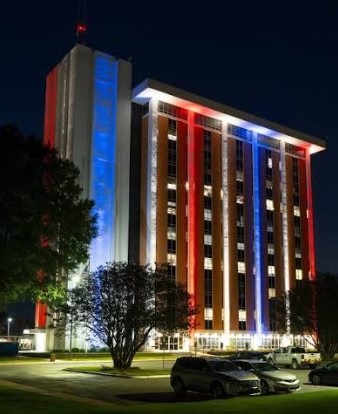
ARDOT will illuminate its Central Office headquarters in Little Rock with blue lights on Wednesday, July 29, and Thursday, July 30. Department employees will also be encouraged to wear blue Thursday in recognition of the international observance.
The effort is designed to raise public awareness, honor survivors and reinforce the importance of recognizing and reporting suspected human trafficking.
World Day Against Trafficking in Persons is observed annually on July 30. The United Nations established the observance to increase awareness of human trafficking, promote the protection of victims and encourage coordinated action to prevent the crime.
Blue has become an internationally recognized color in the fight against human trafficking. The United Nations Blue Heart Campaign uses the color to symbolize both the sadness of trafficking victims and the determination of governments, organizations and individuals working to stop exploitation.
Transportation Employees Can Play Important Role
Transportation professionals can be uniquely positioned to observe possible signs of human trafficking because traffickers frequently move victims between communities, states and countries.
ARDOT employees work throughout Arkansas and interact with motorists, transportation facilities, construction areas and communities across the state. Increasing awareness among transportation workers can help more people recognize suspicious behavior and know how to report it safely.
Officials emphasize that members of the public should not attempt to confront a suspected trafficker. Instead, they should record relevant information when it is safe to do so and contact law enforcement or an appropriate reporting service.
Understanding Human Trafficking
Human trafficking involves the use of force, fraud or coercion to compel someone to perform labor or commercial sexual activity. When a person younger than 18 is involved in a commercial sexual act, proof of force, fraud or coercion is not required for the situation to be considered trafficking under federal law.
Victims may be adults or children and can come from any community or background. Trafficking may occur in cities, small towns and rural areas.
Possible warning signs can include a person who appears fearful, anxious or controlled by someone else; is unable to speak freely; lacks possession of personal identification; shows signs of physical abuse; or appears to be working or living under threats or unreasonable restrictions.
A single warning sign does not necessarily prove trafficking is occurring. Authorities encourage people to consider the circumstances and report reasonable suspicions to trained professionals.
How to Report Suspected Human Trafficking
Anyone facing immediate danger should call 911.
The National Human Trafficking Hotline can be reached by calling 1-888-373-7888 or texting BEFREE to 233733.
Information about suspected human trafficking in Arkansas may also be reported to the Arkansas Human Trafficking Council by emailing ReportHT@arkansas.gov. Arkansas State Police may be reached during an emergency by dialing *277 from a mobile phone.
Reports may help law enforcement identify victims, investigate traffickers and connect survivors with appropriate services.
ARDOT’s blue-light observance on July 29 and 30 will serve as a visible reminder that awareness and responsible reporting can play an important role in combating human trafficking.
The United Nations Office on Drugs and Crime provides additional information about World Day Against Trafficking in Persons. Arkansas reporting information is available through the Arkansas Department of Public Safety.