

Cabot Mayor Ken Kincade says the city’s Flock Safety automated license plate reader cameras have been unplugged, physically covered and made inaccessible to outside agencies following his decision to suspend the program.
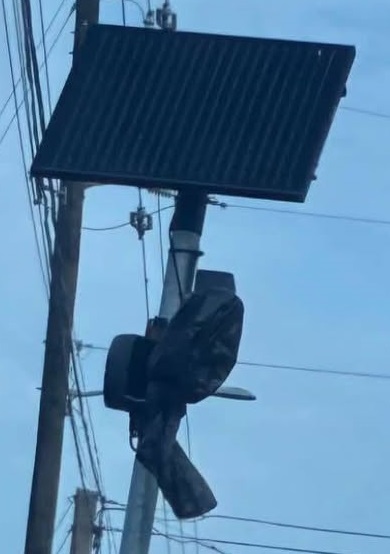
Kincade announced the temporary suspension after residents raised concerns about privacy, data collection and access to information captured by the cameras.
In a follow-up statement, Kincade thanked residents for providing feedback and said he worked with Cabot Police Chief Dodd to take immediate action.
According to Kincade, Chief Dodd first suspended the Cabot Police Department’s use of the Flock Safety system. Kincade said access was then disabled so no other agency could access Cabot’s Flock system.
City employees began working early the following morning to physically disable the devices. Kincade said that by 10 a.m., the cameras had been disconnected from their solar-panel battery sources and covered.
The mayor said the actions were intended to ensure the cameras could not continue operating while Cabot reviews the program.
The city previously said the suspension would allow officials to conduct a comprehensive review of the technology and gather input from residents and local leaders.
Kincade has said public safety and civil liberties must be protected equally as the city considers the future of the program.
The cameras automatically photograph passing vehicles and use software to identify license plates and other vehicle characteristics. Law enforcement agencies can use the information to search for vehicles associated with stolen-vehicle reports, missing-person alerts and criminal investigations.
However, critics argue that automated license plate reader networks collect information from every passing vehicle, including vehicles belonging to people who are not suspected of crimes.
Privacy concerns include how long the information is retained, who can search it, whether it can be shared with other agencies and whether a network of cameras could be used to reconstruct a person’s movements.
FAIRFIELD BAY MAYOR WEIGHS IN
Fairfield Bay Mayor Seth Connell has now joined the public debate over Flock Safety cameras, strongly criticizing the growth of automated license plate reader networks across Arkansas.
Connell said his concerns intensified after he saw a solar-powered license plate reader along a rural dirt road several counties away.
In a video statement, Connell argued that the cameras have become too widespread and create the potential for government agencies to track motorists’ movements.
Connell characterized the technology as a threat to privacy and said he opposes its continued expansion.
He praised Cabot’s decision to temporarily disable its cameras and said citizens should be willing to challenge government surveillance programs.
Connell also questioned whether communities receive enough measurable public-safety benefit to justify the cost and privacy concerns associated with the systems.
He invited Arkansans to participate in a public poll and share whether they believe automated license plate reader cameras violate personal privacy.
Connell did not announce any Flock Safety policy change for Fairfield Bay. His comments expressed his position on the broader statewide debate.
LOCAL-CONTROL CLAIM REQUIRES CLARIFICATION
Concerns have been raised that Flock Safety cameras are part of a vendor-operated network and are not the same as traditional, locally operated stand-alone cameras.
However, the claim that local agencies have no control over Flock data or access is disputed by Flock Safety’s published policies.
Flock says its customers own and control their data, determine who can access it and decide whether it will be shared with other agencies. The company says sharing is optional and does not occur automatically.
Flock also says each search is linked to an authorized user, automatically logged and available for supervisory review. According to the company, local agencies can revoke sharing permissions and disable outside access.
Cabot’s latest actions demonstrate at least some local operational control. Chief Dodd suspended access for Cabot police and other agencies, while city workers physically disconnected and covered the cameras.
At the same time, critics remain concerned that the technology operates through a company-managed platform connecting participating agencies instead of a completely independent, locally stored camera system.
The City of Cabot has not announced how long the suspension will remain in effect, whether the cameras will eventually be removed or whether the city will terminate its contract with Flock Safety.
Kincade said the city is stronger when its residents and leaders work together.
ArkansasRadio.com will continue following Cabot’s review and any future decision concerning the cameras.
IMMEDIATE ACTIONS REPORTED BY MAYOR KEN KINCADE
Cabot Police Department use of the system was suspended.
Access by other agencies was disabled.
The cameras were unplugged from their solar-panel battery sources.
Every device was physically covered.
The program remains suspended during the city’s review.
KEY QUESTIONS REMAINING
How long will Cabot’s suspension continue?
How many cameras does the city have?
How much has Cabot spent on the system?
How long is vehicle information retained?
Which agencies previously had access?
Will Cabot release its access and search logs?
Will residents have an opportunity to speak during a public meeting?
Will Cabot modify or terminate its Flock Safety contract?
Flock Safety says local agencies control access and sharing. However, agencies can participate in broader sharing networks that may allow approved out-of-state law enforcement agencies to search data from participating cameras. Cabot has not announced whether its cameras will be permanently removed.














Leave a Reply