

|
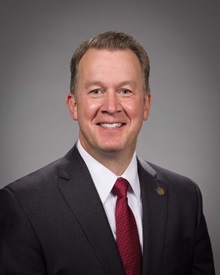
Op-Ed submission written by: Carlton Wing
Executive Director and CEO, Arkansas TV
|
|
More people are talking about public television right now than at any point in recent memory. This is a good thing. It gives us an opportunity to revisit why it exists, what role it plays today, and how it is funded – and to be direct about the financial reality we are facing. Many of us grew up with our favorite children’s programs on public television. In 1966, when the Arkansas Educational Television Network aired its first program, it was one of four options on the dial. Its purpose was clear: to educate, inform, and serve. Nearly 60 years later, so much has changed. We have hundreds of television stations available with a seemingly infinite supply of content available online. That shift matters, and it shapes every financial decision we make. Finding correct answers is best achieved by asking correct questions. Where is public television in the priority of necessities today? Is it different from when it began in 1966? Many may not be aware that Arkansas TV’s statewide tower network is the primary distribution system for all emergency alerts, weather events, and Amber Alerts. When other communication systems fail, our infrastructure is the most reliable signal reaching every corner of the state. When COVID-19 shut down schools in 2020, we were on the air within 10 days, delivering K-8th Grade curriculum for all Arkansas students through the end of the school year. For over 20 years our education department has provided nationally recognized professional development for our K-12 schoolteachers. On our broadcasts, we serve audiences based on need, not on their value to a sponsor. Arkansas TV does not compete with commercial television. We exist alongside it, filling the gaps it leaves behind, telling stories not found anywhere else. Healthy eating on a budget, Arkansas history, the State Spelling Bee, high school achievement, we educate and celebrate Arkansas every day. The numbers are straightforward, and Arkansans deserve to see and hear them plainly. The federal funding cuts took away $2.5 million, which allowed us to pay our dues to PBS, a private organization. Without that funding the math no longer works, and we cannot sustain operations as a public television station for even two more years. We have repeatedly asked PBS for lower dues or even “menu pricing,” allowing us to purchase what we can afford. Despite multiple attempts, the answer remains “no”. Our station reserves stand at $3.9 million, which is a finite cushion that shrinks every day we continue under the current model. Renowned American economist Thomas Sowell defines economics as “the study of limited resources that have alternative uses.” Put simply, life – and public policy – is about priorities. Having served in five legislative sessions, I’ve watched this principle applied daily. Almost every request for the use of taxpayer dollars has merit. But the cumulative request from all is many times more than the available resources, so the legislature must prioritize the most important. It is not an easy task. The majority of Arkansas TV funding comes from your Arkansas State Legislature. In December, the Commission voted to begin the process of disaffiliation from PBS. That decision came after months of data gathering and a careful review of multiple options. It was not hasty – it was honest. And it honored PBS’s required 180-day notice before Arkansas TV’s next fiscal year. PBS currently provides just over half of the programming on our station. It is not the only source of public television content, but it is among the most expensive. We understand and appreciate that viewers have their favorite programs on PBS. So do we. But here is the important context: all PBS programming remains accessible with the PBS Passport app, available for $5 a month. Children’s programming remains free through the PBS KIDS app, available anytime on any device and online. Many Arkansans are already watching their programs this way and nothing about their viewing experience will change. Returning to where we began, has the landscape changed since 1966? Enormously. Is the voice of public television still needed? More than ever. When there was one voice among four, public television stood out. Now, as one voice among thousands, it stands out even more, precisely because it is the single voice serving those who need it most. This is a time for our state to rally around public television. What is at stake here is not simply our membership in one programming network, but the survival of public television itself in Arkansas – the infrastructure, the local voice, the emergency systems, and the educational mission that has defined this station for nearly six decades. Arkansas TV, with our award-winning staff and our commitment to this state, will continue to deliver programming that educates, informs, and serves. We are not stepping back from that mission, we are fighting to protect it, and now you know why. |












Leave a Reply