As of early 2026, artificial intelligence now plays a major role in what users see on Facebook, with content measured across two key areas: how much material is generated by AI and how much is recommended to users by AI-powered algorithms.
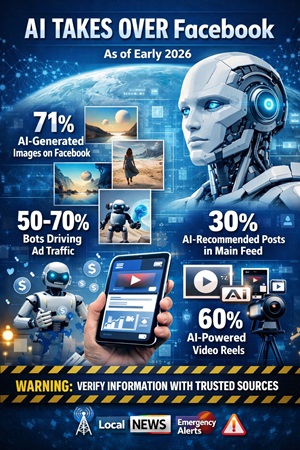
Multiple studies estimate that more than 40 percent of total Facebook posts in early 2025 were likely generated by AI, often referred to as automated or spam content. The percentage is even higher for image-based posts, with research suggesting up to 71 percent of social media images are now AI-generated. In some niche groups — such as nature photography or artwork communities — AI images may account for as much as 90 to 100 percent of shared content.
Advertising activity also shows heavy automation. Studies indicate that between 50 and 70 percent of Facebook ad traffic is driven by bot activity rather than real human engagement, raising concerns about authenticity, accuracy, and consumer trust.
Beyond content creation, AI also controls much of what users are shown. Meta reports that approximately 30 percent of posts appearing in a user’s main Facebook feed are now recommended by AI rather than accounts they follow. Short-form video consumption is even more automated, with more than 60 percent of content viewed on Facebook and Instagram powered by AI recommendation engines through Reels.
To improve transparency, Meta has introduced labeling systems to identify synthetic media. Images generated using Meta’s proprietary tools may carry a “Made with AI” label, while additional detection systems attempt to flag manipulated media created using third-party generators. Despite these efforts, experts say users should remain cautious when consuming online content and verify important information through trusted local and national sources.
Local broadcasters and emergency officials continue to emphasize the importance of relying on verified sources for critical updates — especially during severe weather, emergencies, and public safety situations.